
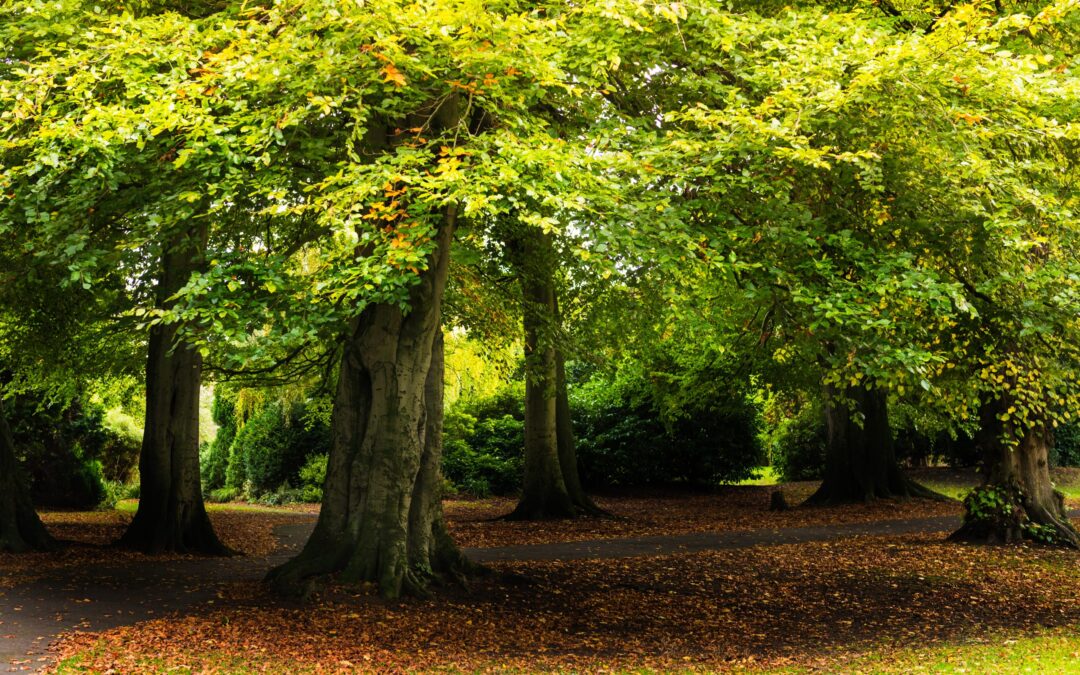
On the morning of August 8, 2026, a family gathered under a line of trees at Serenity Ridge Natural Burial Cemetery in Windsor Mill, Maryland, to lay Julia Fields Lawrence to rest. Her Coming Home Celebration didn’t take place in a chapel or under a funeral tent. It happened outdoors, on 45 acres of protected land bordering Patapsco State Park, among the white oaks, Eastern red cedars, and dogwoods the property was built to preserve.
That setting isn’t incidental to how the day unfolded. Serenity Ridge is Maryland’s first 100% natural burial cemetery, and its ceremonies happen on real, living ground rather than a manicured lawn. Nothing about that morning was staged. What happened instead came from a family standing among actual trees, remembering an actual life, and one moment nobody had planned for.
The Poet Who Spent a Lifetime Writing About Trees
Julia Fields Lawrence was born on January 21, 1938, in Uniontown, Alabama, and died on July 31, 2026, in Laurel, Maryland, at the age of 88. She graduated from Robert C. Hatch High School as a gifted young poet and, from there, earned her degree from Knoxville College in 1961. During that same era, she pushed through a crowd of students at a lecture to reach Robert Frost and tell him she had a poem for him, a moment her family still counts among her proudest.
Afterward, she went on to study at the University of Edinburgh in 1963, and later earned a master’s degree from the Bread Loaf School of English at Middlebury College. She taught high school in Alabama and Washington, D.C., before moving on to teach poetry and writing at East Carolina University, Hampton Institute, Howard University, the University of the District of Columbia, and North Carolina State University.
It was Dr. Rosey E. Pool, the Dutch scholar and civil rights activist who championed Black American literature in Europe, who introduced Julia to Langston Hughes after hearing her read at a campus event. As a result, Hughes became her mentor and friend, and Pool was impressed enough to feature Julia’s early poetry in Beyond the Blues (1962) alongside Hughes, Gwendolyn Brooks, and Audre Lorde.
Meanwhile, trees ran through her work for decades. She published Poems (1968) after receiving a grant from the National Endowment for the Humanities, the play All Day Tomorrow (1966), and the poetry collections East of Moonlight (1973), A Summoning, a Shining (1976), Slow Coins (1981), and The Green Lion of Zion Street (1988). Her most celebrated work, High on the Hog (1969), carries lasting cultural and literary weight, and consequently, her reputation reached far enough that she was invited as a guest poet at the Mirbad Poetry Festival in Iraq. Tucked inside Slow Coins, in particular, was a poem simply called “Trees.”
A Grandson Stood Up and Started Reading
Nobody had scheduled a reading that day. The family had gathered near the line of trees where Julia would be interred, close enough to see the bark, the branches, the shifting light through the leaves. That proximity is part of what a natural burial site at Serenity Ridge actually offers: real trees, not a symbolic planting somewhere off to the side.
Her grandson felt it before anyone said a word about it. Moved by where she was being laid to rest, he stood up on impulse and began reading her poem “Trees” aloud, straight from Slow Coins. He hadn’t planned to speak. He simply stood, because the moment asked him to.
The poem itself describes trees as people. Statesmen. Sentries. Priests and nuns. Grandmothers and lovers, holding meetings of the mind inside their own branches. Read beside an actual grove, at the grave of the woman who wrote it, those lines stopped being metaphor and became something closer to a description of exactly where she was.
TREES by Julia Fields.
some trees, standing in groves
have people inside them holding
meetings,
some trees have people locked
and braced in love.
a pine tree is a gigolo-
notice the scent-always the best
mouthwash,
the best sheen of green shirt,
the tallest, straightest back,
the gentlest arms.
and do not even speak of oaks.
they know the game, get better
and better and better at it .
they are the rugged type, born rough
and with no tender shoots.
they stand alone, majestic, and
are of the order of warriors.
a weeping willow minces.
it draws mantles about itself
and takes small steps, ever
looking into bodies of water
Narcissus-like, to preen
for itself and no other.
it weeps, droops, wilts, and hangs
with limp branches and
leans over the shoulders of
timid types
birches are adolescent boys,
standing taller than their heights
suggest, in groups, boasting and
leaning from the hips like cowboys.
skin breaking out in spots,
set rest-looking on sharp terrain,
not complete in form or
individuality, in mode not plain.
maples are pregnant, the Madonna trees
sugary motherhood enough
splash with quick, self-denigrating leaves
which are russet and reticent.
against the enthusiastic and the rough
they stand, making nutriment.
some trees are courtesans, some
whores, some priest and nuns.
but more are men:
statesmen, sentries, chiefs
granduncles, foremen and lovers.
There are people in them.
From time out of record,
Memory, or mind…..
What That Moment Said About Grief and This Place
Bonnie Sorak, Serenity Ridge’s Community Outreach Liaison, was there that morning. Her daughter Rhoda later wrote to thank her, and shared how the family felt watching it happen.
“Knowing that Julia Mae’s voice and work will echo up and through the beautiful fields and meadows of her resting place fills us with unspeakable joy. She too is certain to be beaming with Joy when she holds her own meetings of the mind inside each and every one of her favorite trees!”
That’s not language a funeral planner writes into a program. It’s what a family says when a natural setting gives them room to respond to loss in a way that feels true to who their mother actually was, rather than a way that fits a script. Serenity Ridge doesn’t try to manufacture moments like this one. Staff prepare the ground, coordinate with the family, and then step back enough for something real to happen if it wants to.
For a poet who spent sixty years writing about trees as living, feeling things, being interred among real ones, and having her own words read back to her there, it wasn’t ceremony for its own sake. It was continuity. Her work and her resting place turned out to be describing the same thing all along.
Find Your Own Quiet Place at Serenity Ridge
Not every family will have a poem written decades in advance of the moment it’s needed. What every family can have is a setting honest enough to hold whatever does happen, planned or not. That’s the difference a natural burial ground makes; the land itself becomes part of how a life gets honored, not just the backdrop for it.
If you’re exploring what a natural burial ceremony could look like for your own family, the clearest way to understand it is to walk the grounds yourself. Reach out to our team to schedule a visit, ask questions, and see the trees for yourself.