
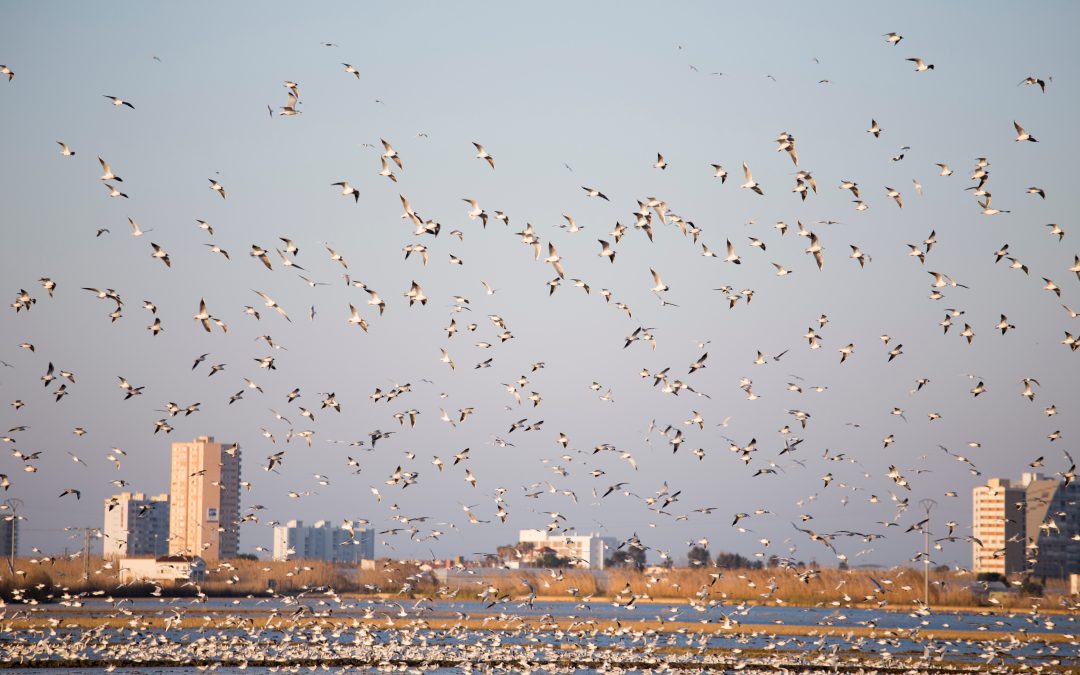
Some of the birds that fill a Maryland yard during the summer have left by the time the leaves begin to turn. A different set has taken their place. Maryland bird migration sorts the birds around you by season, with each kind keeping its own schedule through the fall. Some leave for the winter and others only stop in on the way south. A third group arrives from the north to stay.
Why Do Backyard Birds Change Through the Fall?
Staggered schedules keep the visitors in a yard turning over. Dave Brinker, an avian conservation ecologist with the Maryland Department of Natural Resources (DNR), describes migration as changeable from one species to the next. He names shifting food sources as the main driver behind many of those trips. Insect-eating birds leave once the insects they depend on become scarce.
A bird that nested nearby may already be far to the south, while one from farther north is just settling in. Any given day’s mix reflects many separate journeys at once.
Maryland’s wildlife sources organize the birds this way.
| Leaving for the winter | Passing through | Arriving for the winter |
|---|---|---|
| Ospreys | Many songbirds | Waterfowl |
| Broad-winged hawks | Many shorebirds | Northern birds, especially along the Chesapeake Bay coast |
| Baltimore orioles |
Four observations help identify where a bird from your yard or a nearby trail belongs.
- A bird that was here throughout the summer and is gone by winter belongs with the leavers.
- A bird that appears briefly and moves on is likely passing through on a much longer journey.
- A bird that first shows up in the cold months and remains probably came down from the north.
- A bird that never leaves is a year-round resident.
Which Birds Leave Maryland for the Winter?
Ospreys, broad-winged hawks and Baltimore orioles all head south for the winter, while cardinals, finches and peregrine falcons remain in the state.
Long-distance travelers
According to DNR, ospreys and broad-winged hawks are among the raptors that migrate from Maryland to Central and South America. The Chesapeake Bay holds the world’s largest breeding population of osprey. They winter from Central America down to Brazil. DNR also follows Baltimore orioles, found throughout much of Maryland in summer, as far south as Venezuela.
Individual birds usually return to the same location every year, in winter and in summer, DNR says. The oriole at your summer feeder may well be the same individual that left the year before.
Birds that stay put
Brinker says Maryland’s peregrine falcons tend to stay all year. Many of the birds that stay all winter are seed-eaters, such as cardinals and finches. Those birds form the steady, familiar portion of a yard’s bird population while the travelers come and go through the fall. For a closer look at who stays active once the cold sets in, read about Maryland wildlife in winter.
Who Passes Through on the Way South?
Many songbirds and shorebirds treat Maryland as a rest stop. The Maryland Manual, published by the Maryland State Archives, says both groups rest here during the spring and fall migrations. It calls the state a handy place for migratory birds to stop on their journeys south.
Because these travelers don’t settle permanently, an unfamiliar bird in your yard may disappear before you’ve had a chance to identify it. A short stop still matters to the lengthy journey ahead. While those travelers push south, another crowd is heading our way from the north.
Who Shows Up to Spend the Winter?
Many birds from farther north spend the cold months in Maryland. DNR says the coastal areas along the Chesapeake Bay are a particular draw for many of those northern arrivals. The state loses summer residents and gains winter ones.
Waterfowl are the clearest case. The Maryland State Archives says approximately one third of the waterfowl that winter along the Atlantic Coast come to the Chesapeake Bay.
What Does a Stopover Give a Tired Bird?
A good stop lets a tired migrant rest and feed before the next leg of the trip.
Rest, shelter and food
Between flights, a migrating bird needs somewhere to recover and refuel, and those places are called stopover sites. Researchers writing in the Proceedings of the National Academy of Sciences (PNAS) call them a key but little-studied part of bird conservation, in part because tracking where birds land across a whole continent is difficult.
Every bird in the table needs stops along its route. Maryland serves as an important stopover for the travelers. It’s also a destination for birds that arrive for winter.
Fields and forest cover
Researchers analyzed five years of data from 60 weather radar stations to map where migrating landbirds stop across the eastern United States. The heaviest autumn concentrations lined up with forest, which the researchers call the most important habitat for these birds.
The Baltimore Bird Club describes Serenity Ridge Nature Preserve as a mix of open fields and streamside forest. A yard is far smaller than a nature preserve, but it can still offer some of that same cover.
How Can Your Yard Help Birds Along the Way?
Standing cover and darker skies both help migrants.
Leave native cover standing
Leaving established native trees and shrubs in place gives resting birds valuable cover. Clear them only when space or safety calls for it.
Larger stretches of standing cover, like those in a nature preserve, support birds on a scale no single yard can offer. A yard can sit alongside that kind of land and add a small piece to it. The difference between a nature preserve and a park shapes how each one protects habitat.
Dim the lights at night
BirdCast is a migration forecasting program run by the Cornell Lab of Ornithology and university partners. It publishes lighting guidelines for homeowners and businesses alike. Four of those guidelines fit a yard directly:
- Switch off all non-essential lights from dusk to dawn during the spring and fall migration periods.
- Skip accent lighting on trees and gardens.
- Draw the blinds or dim indoor lights so less light escapes.
- Aim outdoor lights downward, shield them, and add motion sensors.
Follow the flights with BirdCast
Weather radar lets BirdCast forecast migration activity a few days ahead. Its alerts flag where bird numbers will run highest, and they identify the nights when lighting matters most.
Keep Watching the Sky Over Your Yard
Migrating birds depend on suitable stopping places, and those places keep the whole journey possible. A bird you can’t place or a question about the habitat it needs makes a good starting point for a conversation. Reach out to the Preserve team with any bird questions.